

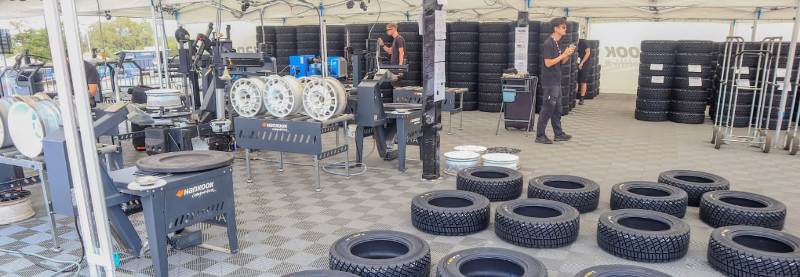
When it comes to the extreme demands of the rally, few components of a rally car face as much punishment as the tires. From sharp rocks and deep ruts to unpredictable weather and high-speed gravel sections, tire durability often determines whether a driver reaches the finish line, behind the scenes, engineers from Hankook tire & technology the official tire supplier to the FIA World Rally Championship from 2025 are constantly working to develop tires capable of surviving some of the harshest rally conditions in the world.
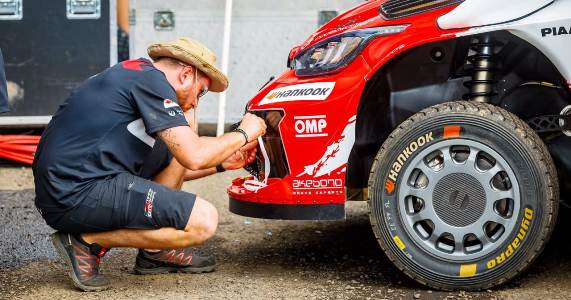
Speaking during the rally weekend, a Hankook tire motorsport director explained the complex challenge of designing tires capable of handling the brutal terrain that defines events like the Safari Rally according to the motorsport director Mr Manfred Sandbichler, Safari rally is one of the toughest rallies on the championship calendar.
When we develop our tires, we don’t design them only for Safari Rally. Instead, we develop tires that can survive a wide range of conditions.”
That means the same tire must perform not only in Africa but also in other demanding environments across the championship, including rallies held in regions such as the Middle East.
“Our goal from the very beginning is to develop a tire that is safe and reliable under very harsh conditions”.
However, even with extensive testing, every rally presents unique surprises.
“When we arrive at a rally, the conditions are always different. That’s why we work closely with the drivers. Their feedback is extremely important because they experience the car and the tire directly on the stages.”
In rallying, driver’s feedback is one of the most important elements of tire development.
After each stage, drivers communicate their experiences to engineers, helping them understand how the tire behaves under specific conditions.
“The drivers are the most important part of the process,” mr Manfred explained. “They tell us how the car feels and how the tire performs, and we use that information to improve.”
These lessons are critical, especially on demanding rallies where tire durability can determine the outcome of the event.
One common question among motorsport fans is whether technology developed in rallying eventually benefits normal road cars.
According to the Hankook motorsport director the answer is yes, but the process takes time.
“What we are doing in motorsport is essentially research and development, you cannot immediately take a rally tire and put it on a road car. But over time, technologies, materials, and knowledge gained here influence the tires we produce for everyday drivers.”
Over the long term, lessons learned in extreme environments such as African rally stages help engineers improve tire durability, performance, and safety for the global market.
The company’s experience in other championships, including Formula E, also plays a role in advancing tire technology.
Formula E presents a unique challenge because teams use a single tire specification throughout an entire race weekend, regardless of whether conditions are dry, wet, hot, or cold.
“So far, we have not had a single tire failure during the season, that shows the importance of safety and durability in tire development.”
The experience gained from electric racing has helped engineers better understand tire performance across a wide range of conditions.
Despite competing in multiple motorsport categories, the engineer emphasized that the World Rally Championship remains one of the toughest testing grounds for tire technology.
“When we became the official tire supplier, we saw it as a huge opportunity in WRC you find conditions that you will not find anywhere else in the world.”
“From icy mountain roads to rough gravel tracks and high-speed stages, the championship pushes tire technology to its limits,
you also have drivers at an incredibly high level, that makes it the biggest challenge for us and we are proud to be part of it.”
For engineers, rallies like the Safari Rally Kenya represent more than just competition they are laboratories for innovation.
Every kilometer driven on these brutal stages provides valuable data that helps improve tire technology for both motorsport and everyday drivers.
And as rally cars continue to push the limits of speed and endurance, the tire engineers working behind the scenes remain focused on one mission, building tires capable of conquering the toughest roads in the world.