

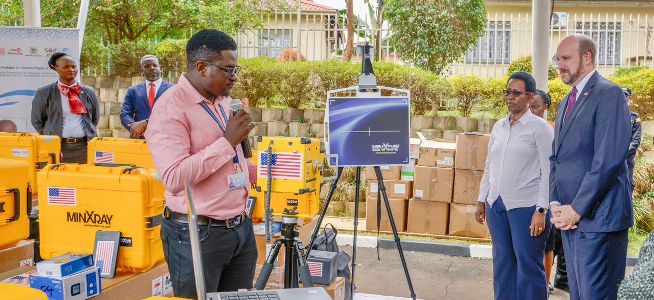
A quiet hum filled the air as health workers gathered around a suitcase-sized machine, its screen lighting up with a chest image analyzed in seconds. That moment captured the promise behind a new U.S.-backed health intervention unveiled in Uganda on December 15, as the United States government, working with the Ministry of Health, commissioned a new fleet of ultra-portable MinXray digital X-ray units designed to transform tuberculosis (TB) diagnosis, especially in hard-to-reach communities.

The initiative introduces 14 AI-enabled MinXray systems, American-made technology built for rugged, low-resource settings, alongside 16 mobile clinics and 33 solar power backup systems supporting TB-LAMP molecular testing. Together, the tools will allow health teams to test more than 1,300 sputum samples daily during community outreaches, accelerating diagnosis and treatment. The deployment comes amid Uganda’s persistent TB burden, where an estimated 250 people fall ill and about 30 die each day from a disease that is preventable and curable.
This latest investment builds on earlier U.S. support that delivered 48 digital X-ray units earlier in the year, bringing Uganda’s total to 65 before the new rollout. Those machines have already screened over 150,000 people and identified more than 4,600 TB cases. With the addition of the MinXray units, Uganda now has 95 mobile digital X-ray and computer-aided diagnosis platforms, extending coverage to more than half of the country’s districts and enabling screening for up to 140,000 additional people each year.

Strategically deployed across TB hotspots, including the Kampala metropolitan area, Karamoja, West Nile, and greater Masaka, the new systems combine speed, portability, and precision. Each unit carries advanced software capable of detecting TB and more than 20 other lung conditions, backed by a three-year extended warranty and software licenses. Radiographers, clinicians, and data assistants have received hands-on training, ensuring the technology is integrated into Uganda’s health system while safeguarding patient data under national protection guidelines.
The rollout coincides with the signing of a five-year, nearly $2.3 billion Memorandum of Understanding on Health Cooperation between the United States and Uganda, underscoring a shared commitment to resilient health systems and global health security. Beyond the numbers and machines, officials say the goal is lasting impact, earlier diagnosis, fewer infections, and stronger local capacity. As one health worker at the launch put it, when technology meets community trust, lives are not just screened, they are saved.