
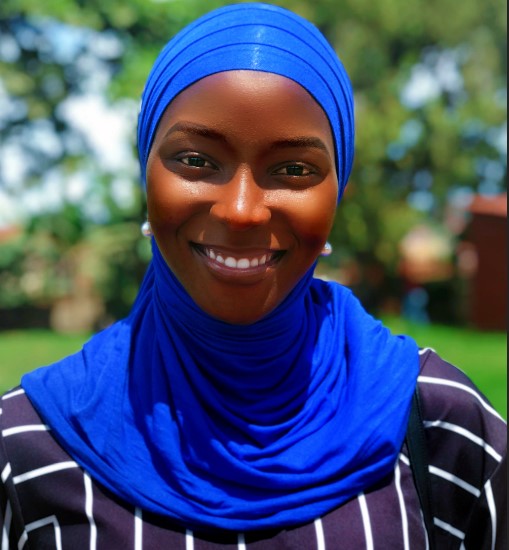
In the heart of Rabat at 3:30 pm today, Shamirah Nabadda carried Uganda’s whistle onto the pitch to officiate the Benin vs Botswana clash at the 2025 Africa Cup of Nations , a moment that doesn’t just mark her first senior men’s AFCON match, but a seismic shift in African officiating culture. From faint whispers of possibility to standing confidently among the continent’s elite referees, Nabadda’s journey has been one of grit, precision, and boundary-breaking achievement.
The story of Nabadda is rooted in nostalgia and quiet defiance. Born in Mbarara City on 26 September 1995, she once chased balls as a left-back at Masaka Secondary School before being nudged toward refereeing at the FUFA Technical Centre in Njeru , a decision that would later reshape Uganda’s football narrative. Just two years after earning her FUFA badge in 2016, she made history as the youngest female centre referee in the Uganda Premier League. By 2018, she had secured her FIFA badge, opening doors to international assignments that steadily carved her reputation across Africa and beyond.
Nabadda’s résumé reads like a passport stamped by football’s biggest stages. From WAFCON and the CAF Women’s Champions League to controlling high-pressure contests at the 2024 African Nations Championship (CHAN), her rise culminated on the global stage at the 2024 Paris Olympics. There, she became the first Ugandan woman and only the second Ugandan overall to officiate at the Games since Ali Tomusange in 2000. Her composure under the world’s gaze and sharp decision-making earned her the coveted CAF Female Referee of the Year 2025, placing her among Africa’s most respected match officials.
Before Nabadda, Uganda’s presence in AFCON refereeing had faded into memory. The last Ugandan centre referee to officiate at AFCON was Muhammed Ssegonga, who took charge in 2008 and 2010, leaving a long silence that stretched over 15 years. While Ugandan assistant referee Mark Ssonko appeared as late as AFCON 2019, none held the centre whistle. Nabadda’s appointment therefore represents more than a personal milestone , it is both a gender breakthrough and a revival of Uganda’s footprint on Africa’s biggest men’s football stage.
What makes Nabadda’s story resonate beyond fixtures and statistics is its human pulse. It carries echoes of school fields, the discipline of training grounds, and the mental strength required to make split-second decisions under relentless scrutiny. Today’s match is not merely a game on the AFCON schedule; it is an anthem to progress. As Shamirah Nabadda steps onto the pitch in Rabat, her whistle will do more than start play , it will signal possibility, representation, and a future where excellence, not limitation, defines who leads the beautiful game.