

Everton said in the club’s recently released annual report and accounts that this was up £9.8 million on the previous year, while losses were significantly reduced at £8.6 million for the financial period.
Everton said gate receipts increased to £20.3 million in 2024/25, up £1.2 million, reflecting continued strong attendances for the final season of senior men’s football at Goodison Park across Premier League fixtures and domestic cup competitions.
Sponsorship, advertising and merchandising revenue rose to £24.3 million, up £2.7 million, supported by new and renewed partnerships including Red Bull, Nemiroff and Corpay.
Other commercial revenue increased to £22.9 million, a rise of £5.9 million, driven by strong supporter engagement, including Everton Way stones, commemorative Goodison Park items and growth in memberships. Broadcast revenue remained stable at £129.2 million.
The club recorded an operating profit (pre player trading) of £28.3 million, compared to a £28.1m loss in the previous year.
Overall loss was reduced to £8.6 million from £53.2 million, reflecting improved underlying performance and a £49.2 million profit recognised from the transaction involving Everton Women and Goodison Park Stadium entities.
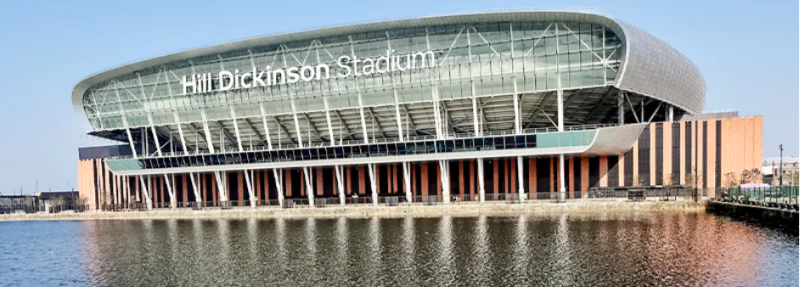
During the period, the club continued to invest in the development of Hill Dickinson stadium incurring capital costs of £114.3 million, bringing total project spend to £813 million.
Operating costs (excluding player trading and exceptional items) increased to £210.5 million, reflecting a £11.5m rise in operating expenses, partially offset by reductions in staff costs and depreciation.
Everton further stated that as the Club’s Men’s team transitioned from Goodison Park to Hill Dickinson stadium, there has been a step-change in operating costs.
Stadium operating costs have nearly doubled, with increases driven primarily by maintenance, utilities (including rates), safety requirements and additional staffing.
Angus Kinnear, Everton’s Chief Executive Officer, said: “Over the course of the financial year, and particularly following the change in ownership, the Club made significant progress in stabilising the financial position and creating a platform for long-term growth.
“The delivery of Hill Dickinson Stadium has been central to that progress. It represents a transformational opportunity for the Club, our supporters and the wider city, and will play a key role in driving future revenues. Growing our revenues is essential if we are to support our ambitions on the pitch and compete consistently at the highest level.