

At the edge of dawn in Fort Portal, the ancient symbols of Tooro royalty took centre stage as a succession dispute gave way to a new reign. Edward Rukidi Kijanangoma, a former television journalist, was formally installed on Tuesday as the 13th king of the Batooro people, adopting the royal name Edward Rukidi Nyabongo I in a ceremony steeped in tradition, symbolism and royal pageantry.
Nyabongo I, 56, succeeds King Oyo Nyimba Kabamba Iguru Rukidi IV, who died in the United States on August 27 at the age of 34 while receiving treatment for angiosarcoma, an aggressive form of cancer. Oyo, who became king at just three years old in 1995 following the death of his father, became one of Africa’s most recognisable child monarchs. His death, however, opened a succession dispute after his mother, Best Kemigisa, and sister, Princess Ruth Komuntale, maintained that he had left behind a young son who was named as heir in a will.
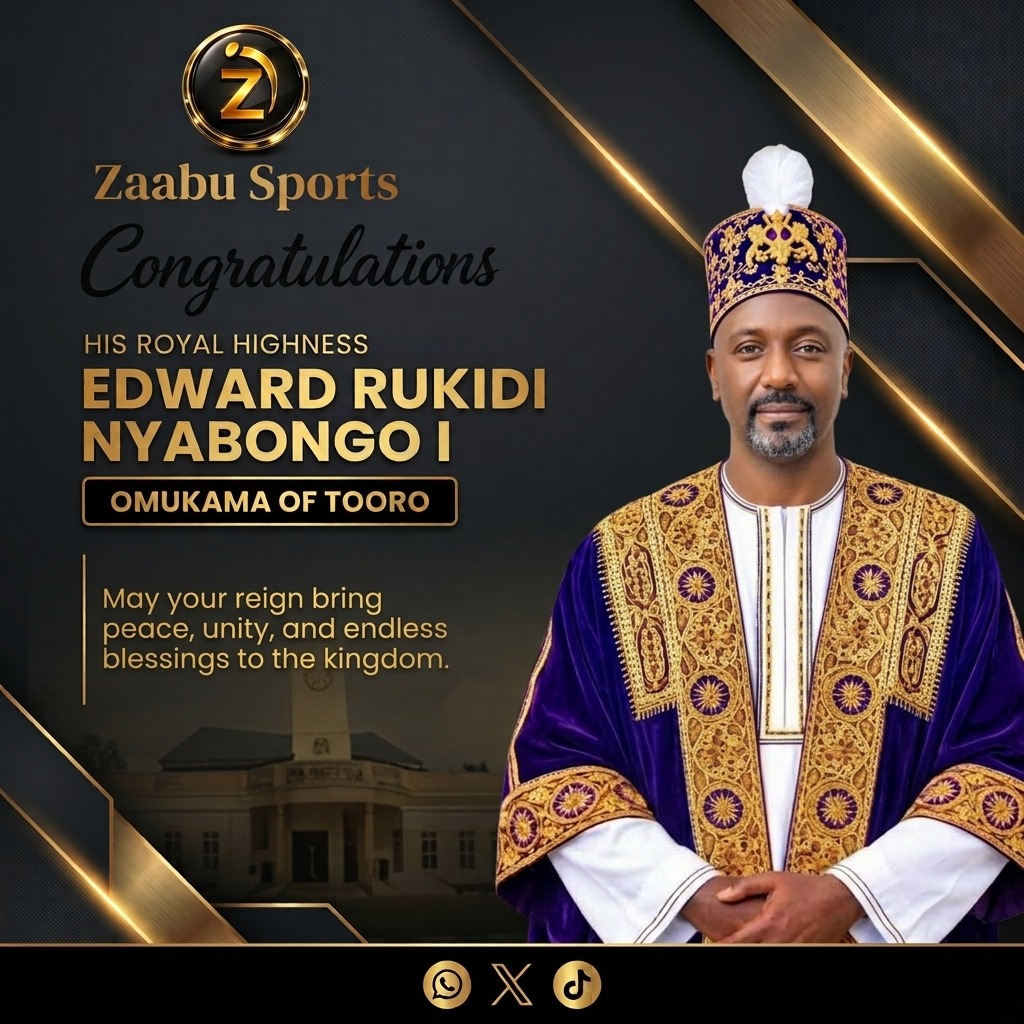
The Babiito royal clan ultimately selected Kijanangoma, a cousin of the late king, after a 21-member succession committee considered the next occupant of the throne. The decision was challenged by the late king’s family, while Charles Kayondo Kamurasi, the Omusuuga and senior Babiito figure who had exercised authority since Oyo’s death, said the alleged child was not known to the clan and that established Tooro customs had been followed. A source familiar with the dispute told Reuters that the central government supported the selection of Kijanangoma, a claim that underscores the political sensitivity surrounding the transition, although Uganda’s traditional kingdoms have no constitutional political authority.
The coronation unfolded through a striking blend of ritual and spectacle. Before reaching Karuziika Palace, Nyabongo I undertook traditional rites that included the slaughter of a bull and the sprinkling of a hen’s blood, followed by a symbolic battle for the crown. Young men carrying sticks and spears, dressed in tunics, orange shawls and animal skins, participated in the dramatic proceedings as dancers and drummers filled the royal setting with traditional performances. Earlier, Kamurasi formally handed over authority to the incoming monarch during a service at St John’s Cathedral, while President Yoweri Museveni joined other dignitaries at the celebrations.
For the Batooro, the coronation was therefore more than the arrival of a new occupant at Karuziika Palace; it was a public reaffirmation of a cultural institution navigating an unusually turbulent succession. In his maiden address, Nyabongo I pledged to defend Tooro’s customs, traditions and standards of conduct while urging his subjects to protect the environment. As Fort Portal celebrated with traditional dress, praise music and renewed interest among younger generations, the kingdom turned the page on a contested chapter—leaving the new king with the task of preserving an ancient identity while carrying a crown inherited through modern uncertainty.