
From the brutal roads to the final stage in Sardinia, Hankook’s second WRC season has been a continuing laboratory for tire technology, durability and innovation
When a World Rally Championship car launches from the start line, attention naturally goes to the driver.
The engine.
The sound.
The speed.
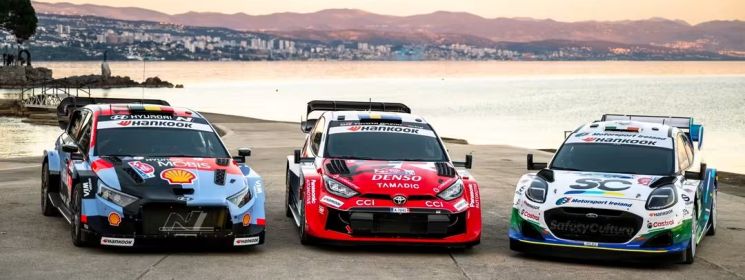
The battle between Toyota, Hyundai and M-Sport Ford. But beneath every one of those machines is a component that has perhaps the most direct relationship with the road: the tire.
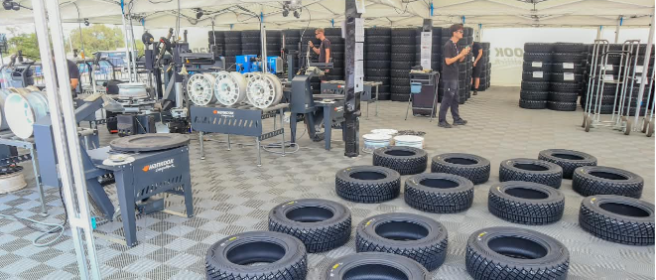
Four contact patches separate a Rally1 car from gravel, asphalt, snow, mud, tarmac and everything else the WRC can put in front of it.
And while fans see the cars attacking stages at extraordinary speeds, another competition is taking place quietly between the tire and the road.
1. How much grip can be generated?
2. How much heat can the tire withstand?
3. How much punishment can the construction absorb?
And, perhaps most importantly, can it survive long enough for the driver to complete the stage at maximum attack? For Hankook Tire & Technology, these questions have been at the centre of its FIA World Rally Championship programme since becoming the championship’s official tire supplier in 2025.
After completing its second season in the WRC, Hankook’s work has moved beyond simply supplying tires to the championship.
It has become an ongoing process of testing, learning, analysing and developing.
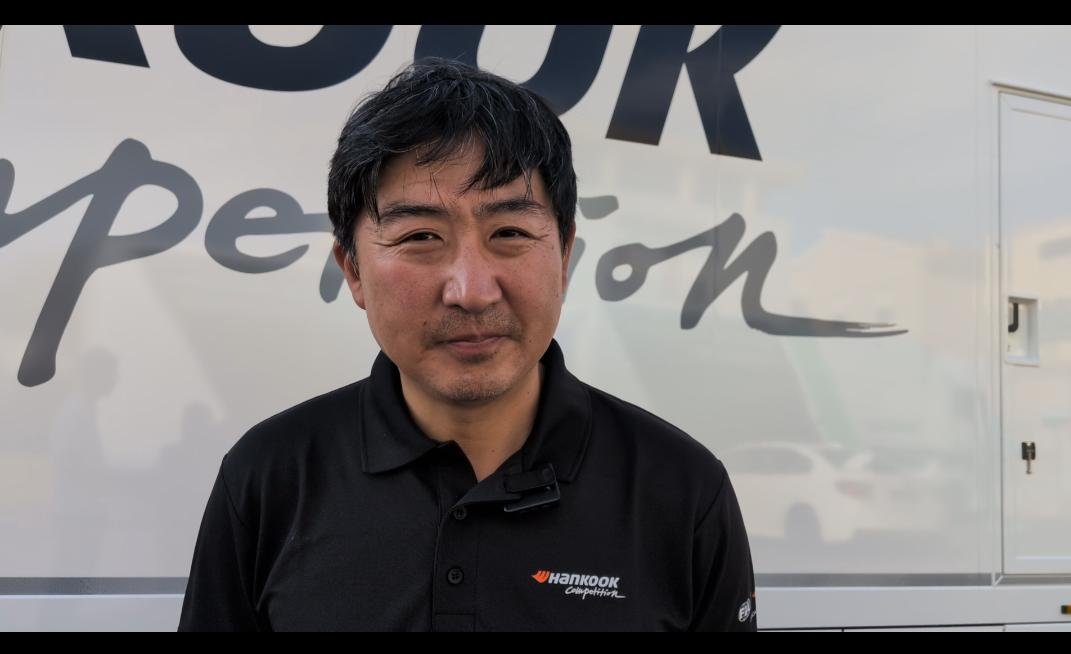
And according to Steven Cho, a Hankook WRC representative I spoke to during Rally Italia Sardegna, that process does not stop when the final rally ends.
“Motorsport and competition is an ongoing development process.”
Hankook is already looking ahead to a new generation of rally cars and a new chapter in tyre development from the rough, punishing roads to the changing surfaces Hankook has to develop tyres capable of handling very different conditions while maintaining the balance between performance and durability. One of the biggest challenges, according to Cho, is that some rally conditions are almost impossible to reproduce perfectly in testing, smooth, dry tarmac can be tested relatively easily. Snow and ice, however, are seasonal, while extremely hot conditions and rough roads that deteriorate throughout a rally are much harder to replicate, that becomes even more complicated when dozens of rally cars pass over the same stage. After around 60 cars have attacked a road, the surface can be completely different from what engineers initially tested.
For Hankook, that unpredictability is part of the challenge, when durability matters in rough conditions, tyre durability becomes critical.
Hankook wants its tyres to survive the punishment long enough for the competition to be decided by the drivers rather than tyre failures. But rallying will always involve risk, the combination of sharp rocks, ruts, changing grip and high speeds means there is no single formula that guarantees perfection, that is why development continues throughout the season.
THE DRIVER BECOMES PART OF THE DEVELOPMENT TEAM
Modern motorsport development is increasingly data-driven but numbers alone cannot tell engineers everything. There is another source of information sitting inside the car: the driver. Drivers experience the tire in ways that laboratory equipment cannot completely reproduce: they can feel changes in grip, sense how the car behaves when the tire begins to lose performance, describe how the tire responds to braking, acceleration and cornering and that feedback then travels back to the engineers.
Cho described the communication between manufacturers, drivers and Hankook as continuous and important to the development process, there may not be one single area that determines the direction of development.
Instead, engineers take the positives from the tire’s performance and identify areas where improvement is still required.
This creates a cycle:
Test → compete → collect feedback → analyse → develop → test again.
And the cycle continues.
Hankook’s experience in motorsport extends beyond rallying, including its involvement in Formula E.
But WRC presents a completely different engineering challenge. Formula E is built around a very different racing environment and tire philosophy, rallying takes the tire into conditions that are constantly changing not only from event to event, but from stage to stage and sometimes corner to corner. There is snow, ice, gravel, tarmac, asphalt, dust, heat, rocks and there are roads that change as the rally progresses that makes the WRC an unusually demanding development environment.
Cho described the championship as an opportunity to encounter conditions that cannot easily be found elsewhere.
For Hankook, every rally therefore contributes another piece to the development puzzle.
THE END OF THE SEASON IS NOT THE END OF DEVELOPMENT
Rally Italia Sardegna marked the end of the 2026 WRC season. For many people in the championship, that might suggest a pause.
For Hankook, it meant something very different. Testing continues.
Cho explained that the company was moving directly into testing after the Sardinia event, with development work already underway for the next season, that is an important part of understanding motorsport technology.
The championship may have a final podium, points may stop, trophies may be awarded but engineering does not stop at the finish line.
The data collected during the season becomes the starting point for the next development cycle and that means the final rally of one season can effectively become the first test session for the next.
AFRICA: THE NEXT OPPORTUNITY
There is another part of Hankook’s WRC journey that caught my attention during my conversation with Cho.

Africa.
Safari Rally Kenya has already demonstrated the continent’s unique contribution to the WRC.
It brings extreme heat, rough terrain, long competitive stages and conditions that place enormous demands on both cars and tires.
But beyond the technical challenge lies something equally important: an audience.
Africa has a deeply passionate motorsport community from Kenya and Uganda to other countries across the continent, rally fans have followed the WRC for generations. Hankook sees the WRC as an opportunity not only to demonstrate its technology but also to build greater awareness among African motorsport fans.
Cho expressed the company’s hope that its work in the WRC can help Hankook build its own fan base across Africa, that ambition is particularly interesting because motorsport is not simply about the cars. It is about communities, fans, drivers, teams, manufacturers and the companies that support the ecosystem
THE FINISH LINE IS ONLY ANOTHER STARTING POINT
When the final Rally1 car crossed the finish line in Sardinia, the 2026 WRC season officially came to an end. But for Hankook, it was not really an ending.
Testing was already waiting.
New cars are coming.
New regulations will bring new technical challenges.
New drivers will arrive.
New roads will be attacked.
And new lessons will be learned.

That is the nature of motorsport, the technology never stands still. For Hankook, the journey from Monte Carlo to Rally Italia Sardegna was not simply about supplying tires to some of the world’s fastest drivers. It was about placing its technology against some of the harshest roads on the planet and asking a simple question after every stage: How can we make the next tire better?
The answer will not come from one rally, it will come from the accumulated knowledge of thousands of kilometres, countless tests, driver feedback, engineering analysis and the relentless pursuit of improvement.
And as WRC moves into its next chapter, Hankook’s development story continues with it.
The season may be over. The testing has only begun.