

The floodlights failed, the football stopped, and the spotlight shifted from the pitch to the regulations governing Uganda’s top-flight competition. KCCA FC’s 2026/27 StarTimes Uganda Premier League encounter against UPDF FC at MTN Omondi Stadium, Lugogo, ended prematurely on Thursday, October 22, after approximately eight minutes when the stadium lighting system failed. The eagerly anticipated contest had begun at an energetic pace, with UPDF showing early initiative before the sudden blackout brought proceedings to a standstill. Players remained on the field briefly as officials assessed the situation before both teams withdrew to the dressing rooms. What should have been a contest decided by footballing quality instead became a test of infrastructure reliability, match administration and regulatory accountability.
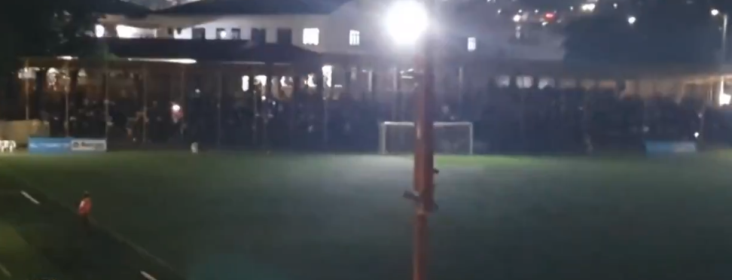
The incident raises a fundamental question for the Ugandan game: who bears responsibility when a stadium cannot provide the conditions required to complete a fixture? Rule 31(5) of the FUFA Competitions Rules, as cited in reports on the incident, requires the referee to suspend play for up to 30 minutes, or until the lights are restored, whichever comes first. If the required licensed lighting standards cannot be restored within that period, the referee must abandon the match. Crucially, abandonment does not automatically establish wrongdoing by either club. The cause of the failure must be investigated before sporting sanctions can be determined. KCCA has apologised to its supporters, UPDF and other stakeholders, and indicated that it would cooperate with relevant parties to establish what happened while awaiting further communication from FUFA.
The possible sporting consequences depend on the investigation’s findings. Under the provisions of Rule 31(6), if the home club is found responsible for, or to have benefited from, the incident, it may forfeit the match and face further disciplinary action; comparable consequences apply if the away club is implicated. If the failure is established to have resulted from unavoidable circumstances and the match has lasted less than 70 minutes, the rules provide for the Tournament Organising Committee to reschedule it as a continuation-of-play fixture. Since this encounter was halted in its opening minutes, that provision could become central if the failure is classified as unavoidable. However, neither a 0–3 forfeiture nor any other sporting outcome should be presumed before the competent FUFA authorities complete their assessment. The referee’s decision to abandon the contest and the subsequent determination of responsibility are separate matters, governed by the applicable competition rules.
International football offers a useful comparison, although the regulations of different competitions are not interchangeable. The Confederation of African Football publishes separate regulations for competitions such as the CAF Champions League and CAF Confederation Cup, while FIFA’s competition-specific rules and stadium requirements also address match conditions and venue standards. UEFA’s current stadium infrastructure regulations, for example, require suitable floodlighting and provide for independent backup power arrangements at specified competition categories, alongside maintenance and lighting-certification requirements. These standards illustrate the broader principle that reliable match lighting is an operational and safety requirement, not merely a broadcasting convenience. They should not, however, be presented as automatically binding on the Uganda Premier League; the applicable FUFA regulations and the stadium’s licence determine the domestic case.
Beyond the immediate fate of the fixture, the blackout presents FUFA, the league organisers and the stadium’s responsible operators with a broader infrastructure challenge. A thorough review should establish whether the failure originated in the public electricity supply, internal distribution equipment, generators, switching systems or the floodlights themselves; these remain possibilities, not established causes. Investigators should also verify the validity of the venue’s applicable floodlight certificate, maintenance records, backup-power readiness and compliance with the required lighting standards. The final decision must balance sporting fairness, the integrity of the competition and the interests of spectators who paid to attend. Lugogo’s unfinished contest is therefore more than a postponed football spectacle: it is a reminder that a professional league’s credibility depends not only on what happens between the touchlines, but also on whether its venues can reliably support the game.