
The fiercest rivalry in Spanish football has moved from the pitch to the paperwork. Real Madrid and Barcelona are once again locked in a contest, this time over the handling of the long-running Negreira matter, after UEFA confirmed it had received a substantial volume of documentation submitted by Real Madrid concerning payments made by Barcelona to José María Enríquez Negreira, the former vice-president of Spain’s Technical Committee of Referees. UEFA says its Ethics and Disciplinary Inspectors will assess the latest material as part of the ongoing review.
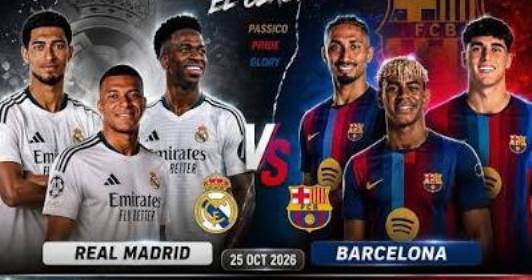
Real Madrid has responded by demanding that the UEFA process move with urgency, arguing that the material it submitted raises questions concerning competition integrity, transparency and confidence in the refereeing system. The Madrid club says its complaint contains extensive documentation and evidence relating to what it describes as events of exceptional seriousness, and has pledged to continue cooperating with UEFA as the investigation progresses.
Barcelona, however, has drawn a different line through the latest development. In an official response, the Catalan club stressed that UEFA has not opened a new proceeding, arguing that the disciplinary process began in 2023 and has remained ongoing. Barcelona says UEFA has merely received additional documentation from Real Madrid, which investigators will assess within the existing process, and insists that the latest UEFA communication contains no conclusion about the substance or value of Madrid’s material.
At the heart of the dispute is the Negreira matter, which concerns payments made by Barcelona over a prolonged period to companies linked to Negreira while he was a senior figure within Spain’s refereeing structure. UEFA appointed Ethics and Disciplinary Inspectors in 2023 to investigate a potential breach of its regulatory framework. Barcelona maintains that it has cooperated with the process and notes that it has continued to obtain its UEFA licence and participate in European competitions during the investigation.
Now the ball is firmly in UEFA’s court—but this is a match without a referee’s whistle, scoreboard or final minute. Madrid wants the evidence examined swiftly and the appropriate decisions taken if violations are established; Barcelona insists that the latest development should not be portrayed as the opening of a new case. Until the investigators reach their own conclusions, the most consequential fixture between these two giants may be unfolding not beneath stadium floodlights, but inside UEFA’s disciplinary offices.