
When the whistle blows to usher in the 2026 FIFA U-20 Women’s World Cup in Poland from 5–27 September, Uganda’s footprint on the global stage will not be carried by a player but by a woman in black whose journey has redefined the limits of African refereeing. At just 30 years old, FIFA referee Shamirah Nabadda has become one of the continent’s most trusted match officials, earning selection among the elite referees for the global youth showpiece in Poland. Her appointment is not merely another assignment; it is a culmination of years of excellence that have elevated her from local school tournaments in Uganda to the pinnacle of international football officiating.
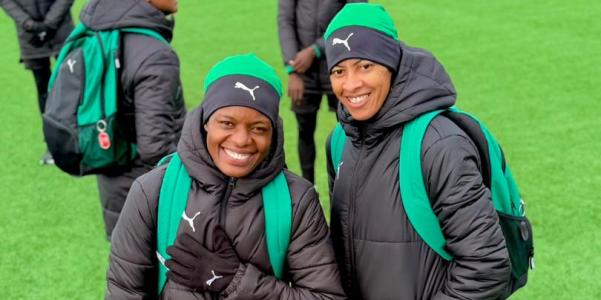
Nabadda’s ascent began within Uganda’s refereeing structures under the auspices of the Federation of Uganda Football Associations (FUFA), where she progressed from grassroots competitions and the famed Copa Coca-Cola schools championships to the country’s top domestic leagues. A former player who featured as a left-back during her school days and later graduated with a journalism degree from Bishop Stuart University, Nabadda’s transition into officiating was sparked by a short refereeing course at the FUFA Technical Centre in Njeru. By 2016, she had already emerged as the best female referee at Uganda’s national schools football championships before earning promotion to the FUFA Big League and subsequently the Uganda Premier League. Her meteoric rise culminated in obtaining her FIFA badge in 2018, opening doors to continental and global assignments.
Her influence has since transcended Uganda’s borders. Within CECAFA, Nabadda has become synonymous with consistency and professionalism, while under the Confederation of African Football (CAF) she has steadily climbed the ladder, officiating at the 2022 Women’s Africa Cup of Nations, the CAF Women’s Champions League, Olympic qualifiers, FIFA Women’s World Cup qualifiers, CHAN 2024 and several CAF youth tournaments. She was trusted with one of African women’s football’s marquee fixtures, the WAFCON semi-final between Nigeria and South Africa, and her impeccable performances earned continental recognition when she was crowned CAF Women’s Referee of the Year in 2025. Significantly, she shared the continental spotlight with Somali referee Omar Abdulkadir Artan, who was named CAF Men’s Referee of the Year after becoming the first Somali referee to officiate at the Africa Cup of Nations and among the select African officials initially designated for the 2026 FIFA World Cup in the United States, Canada and Mexico.
At FIFA level, Nabadda has transformed from a promising official into a genuine trailblazer. She became the first Ugandan woman appointed among match officials for the Paris 2024 Olympic Games, featured at the FIFA U-17 Women’s World Cup, and took charge of crucial FIFA U-20 Women’s World Cup qualifying fixtures, including Ghana against Tunisia. Her inclusion among the officials heading to Poland in 2026 therefore comes as a natural progression rather than a surprise. FIFA’s repeated confidence in her abilities underscores her reputation for sound decision-making, excellent game management and elite physical preparedness. Meanwhile, Artan’s own World Cup aspirations were dealt an unfortunate blow after he was denied entry into the United States despite holding valid travel documentation, effectively ruling him out of officiating at football’s biggest spectacle. Nevertheless, his stature within global refereeing remains intact, having continued to receive appointments for elite international fixtures and recognition for his pioneering role in elevating Somali officiating.

As Poland prepares to host 24 nations chasing global glory, Africa will send not only talented players but also a referee who has become a benchmark for a new generation of female officials. For Uganda, Nabadda’s journey from a short refereeing course at Njeru to the world’s premier youth tournaments offers compelling proof that excellence in officiating can travel as far as excellence on the pitch. In an era increasingly celebrating women who break barriers in football, Shamirah Nabadda is no longer simply Uganda’s leading female referee; she has become Africa’s whistle of authority, carrying the continent’s aspirations with every decisive blast in Poland. Alongside contemporaries such as Omar Abdulkadir Artan, she represents a transformative generation of African referees whose achievements are steadily reshaping perceptions of officiating excellence and ensuring that Africa’s voice is heard as clearly behind the whistle as it is in front of goal.