
There is a point in every driver’s career when the question stops being about what he still has to prove and becomes about what he could achieve if the right pieces finally came together.
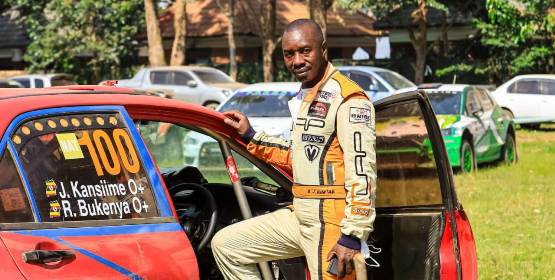
For Jonas Kansime Matayo, that conversation has followed him this year.
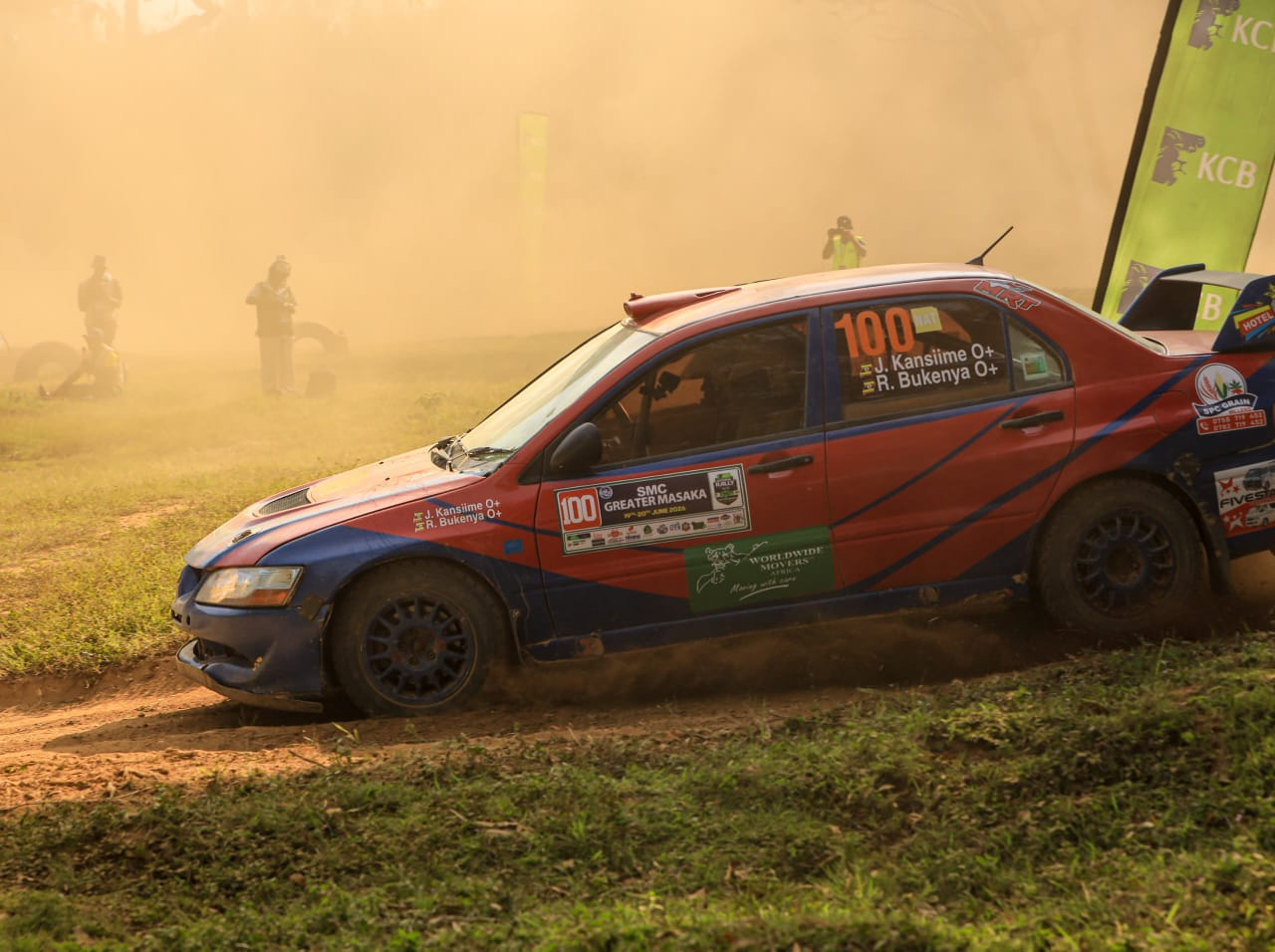
Ahead of the UMC Fort Portal Rally, Round Six of the 2026 National Rally Championship, Kansime car no 100, Mitsubishi Lancer Evolution VIII with 169 points on the NRC standings 2026 in 4 position that has become closely associated with his rallying journey.
It is not the newest machine in Uganda’s increasingly competitive rally field. It is not a modern prototype built around the latest technology. Yet, somehow, Kansime continues to make it talk and that is perhaps why some of his fans have reached a simple conclusion:
He doesn’t owe us anything.
Not because they do not want to see him win, but because, in their eyes, he has already given them what sports fans ultimately ask for — excitement, commitment, battles and memories.
What they want now is to see what happens when a driver they already believe in gets the machinery and support to match his ambition.
Before the helmet, there was the boy who loved cars
Kansime’s relationship with cars began long before rally stages, competition numbers and service parks, he recalls developing a fascination with cars at around the age of 14. That interest eventually took him into workshops and garages where he began learning more than simply how to drive. He wanted to understand the machines themselves.
The workshops became part of his informal classroom with help of his friend Edson Mugyereza, he watched, asked questions, worked around mechanics and gradually developed practical knowledge of vehicles. That technical exposure would later become important in a sport where a driver can lose an entire rally because of a small mechanical failure, Kansime, therefore, rallying was never simply about sitting behind a steering wheel and going fast, it was about understanding the machine beneath him – that foundation would become one of the defining characteristics of his career.
The discipline that started at home
Behind the driver is also a family story, Kansime was raised by his parents, Matayo Mwambazi and Manjeri Kamalembo, both of whom are now deceased. The discipline that people see in him today, he says, was shaped during those formative years. It is an important part of understanding Kansime away from the competition. The driver fans see attacking stages is also the product of values formed long before he became a familiar face in Ugandan motorsport. His parents may no longer be here to watch him compete, but the discipline they instilled remains part of the person who continues to return to the stages.
Kansime’s competitive journey dates back to the early 2010, when he began finding his way into competitive driving, the early years were far from glamorous, there were brake problems, gearbox issues, service difficulties, penalties and moments when a promising drive could quickly turn into a fight simply to finish but those experiences taught him something fundamental about rallying: Speed alone does not win rallies.
A driver needs a reliable car, a capable service crew, money for preparation, the right tyres, logistics and sometimes a little luck. Kansime remembers occasions when the car was not at its best but he could still produce competitive stage times, those moments became evidence of something he would carry throughout his career — the belief that the driver still matters, even when the equipment is not perfect.
When the result hurts more than the drive
Rallying has also given Kansime experiences that went beyond mechanical failure, “He recalls a competition in which he felt a result had not been handled fairly and decided to lodge a protest” Kansime said. For him, the issue was bigger than winning or losing.
He was concerned about how the matter was handled and felt uncomfortable with prize-giving proceeding before the issue had been resolved. He says he chose not to attend the prize-giving because he believed the process needed to be addressed first, it was one of the moments that shaped his thinking about the sport beyond the cockpit.
Kansime’s position is that competitors need to feel heard and represented, particularly when disputes arise, his account is his perspective on the incident, but it reveals an important side of his character: he is not only interested in driving. He is also interested in how the sport around the drivers functions.
His view on FMU’s amended constitution
That thinking extends into his views on governance within Ugandan motorsport. Kansime believes competitors and active participants should have a meaningful voice in the structures that govern the sport, constitutional changes should not simply be administrative exercises. They should contribute to stronger representation, accountability, transparency and dialogue between those running the sport and those competing in it.
His argument is ultimately about ownership, drivers invest money, time, equipment and personal risk into rallying. They therefore deserve to be part of conversations that affect their competition environment and welfare.
These are Kansime’s views, shaped by his own experiences within the sport, but they speak to a wider conversation facing motorsport: how do you build a championship in which competitors feel that they are not simply participants, but stakeholders?
The Evo 8: an older machine with something left to say
Then there is the car, the Mitsubishi Lancer Evolution VIII may belong to an older generation of rally machinery, especially when compared with newer technology and prototype-based cars appearing in modern competition but Kansime’s Evo 8 has continued to produce results. That is where the relationship between driver and machine becomes interesting.
The car may not have everything the latest machinery offers, but Kansime knows how to extract what it has, his speed has become part of the reason fans continue to watch and perhaps this is where the phrase “He Doesn’t Owe Us Anything” carries its real meaning.
Fans are not saying they have stopped expecting from him. They are saying they already appreciate what he has given them.
They have watched him fight with the machinery available to him and return after mechanical setbacks, he push an older-generation car into battles where newer technology might appear to have the advantage, their wish is not simply for another trophy. It is to see Kansime in a machine capable of allowing his talent to speak even louder.
Behind every rally weekend is a financial reality that spectators rarely see. A car has to be prepared, engines, gearboxes, turbos, brakes and suspension components have to be maintained. Tyres, fuel, entry fees, accommodation, transport and service support all add to the cost. Kansime has experienced that reality repeatedly.
There have been periods when mechanical failures forced him away from competition, repairs and investments, only for another problem to emerge. That cycle can break the momentum of any privateer: prepare, compete, break down, repair, raise money, return, yet Kansime has continued with that resilience may be one of the most overlooked parts of his story because sometimes the biggest victory for a privateer is simply finding a way back to the start line.
So why do fans still believe?
Because they have seen enough, the speed, the fight, the older Evo 8 produce moments that remind them that rallying is still about the person behind the wheel as much as the machinery underneath him. And they know that a driver’s career cannot always be measured by championships alone.
There are drivers who win because they have the best machinery, the biggest budgets and the strongest support structures, then there are drivers who make fans wonder:
What if?
1. Jonas Kansime had the latest machinery?
2. the mechanical problems were fewer?
3. the financial burden was lighter?
4. the experience he has accumulated over the years was matched by a car built to exploit every bit of his speed?
Those questions are part of why his supporters continue to believe.
Fort Portal is another chapter
Now the focus turns to Fort Portal round Six of the 2026 National Rally Championship offers Kansime another opportunity to put the Evo 8 through its paces and remind the championship why he remains a driver worth watching.
There is no guarantee in rallying.
A fast driver can retire on the first stage. A perfect preparation can be undone by a puncture, mechanical failure or mistake. And an older car can surprise everyone — just as easily as it can surrender to its age. That uncertainty is precisely what makes rallying compelling.
For Kansime, Fort Portal is not the final judgement on his career. It is simply the next stage.
This is the best way to understand Jonas Kansime Matayo.
He is not simply a driver in an Evo 8.
He is a driver whose journey has been built through patience, mechanical setbacks, financial pressure, governance debates, family values and an enduring belief in his own ability. His parents gave him discipline, the workshops gave him technical understanding, rallying gave him the platform, the setbacks gave him resilience and the fans gave him a reason to keep returning.
So when they say “He doesn’t owe us anything,” it is not a demand for less.
It is almost the opposite, the recognition.They have already enjoyed the battles, the speed and the moments now they simply want to see how far Jonas Kansime Matayo can go if the machine beneath him finally matches the driver they have believed in all along.
Fort Portal will provide another opportunity to find out.