
The death of His Majesty Omukama Oyo Nyimba Kabamba Iguru Rukidi IV, at the age of 34, marks the end of a remarkable 31-year reign and the loss of a young monarch whose influence reached far beyond the royal palace. Born on April 16, 1992, to Omukama Patrick David Matthew Kaboyo Olimi III and Queen Mother Best Kemigisa, Oyo ascended the Tooro throne on September 12, 1995, at only three years old, following the sudden death of his father. He grew into one of Uganda’s most recognisable traditional leaders, navigating the delicate space between cultural leadership and modern development. His reign was shaped by an effort to preserve Tooro’s identity while positioning the Kingdom for a future driven by education, youth empowerment, technology, agriculture, tourism, health and enterprise. His death therefore represents not merely the passing of a King, but the closing of an important chapter in the evolution of Uganda’s restored traditional institutions.
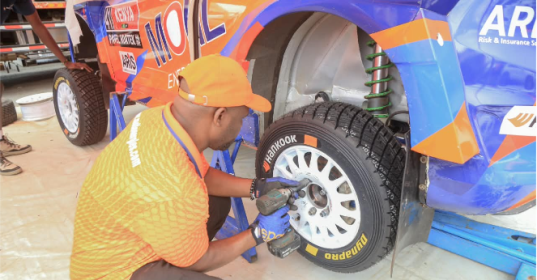
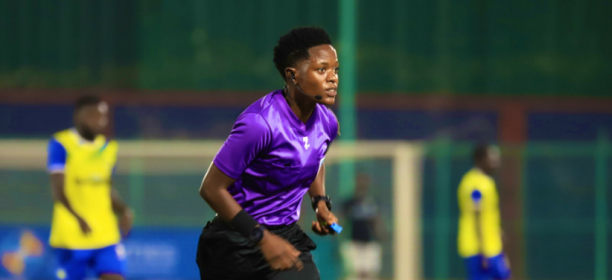
For the sports fraternity, however, King Oyo leaves a particularly distinctive legacy. He understood that sport could be much more than entertainment—it could be a vehicle for talent identification, employment, health, social cohesion and community development. His support for the Tooro Masaza Cup, involving the Kingdom’s nine counties, transformed football into a powerful grassroots platform where young people could compete, discover their abilities and attract scouts. His relationship with FUFA demonstrated his commitment to connecting traditional leadership with formal sports administration, while his support for the Uganda Cranes showed that his sporting interests extended beyond Tooro. He visited the Cranes camp during the 2019 Africa Cup of Nations in Egypt and personally encouraged the national team. Under his patronage, Tooro’s sporting agenda expanded beyond football into cycling, basketball, junior golf, women’s netball and motorsport. He was not simply a ceremonial patron; he participated in sporting activities himself, embodying the active lifestyle he encouraged among young people.
Perhaps the most important aspect of Oyo’s sporting legacy was its social and economic purpose. His administration increasingly used football and other sporting events to reach young people with HIV/AIDS awareness, testing and health information, while competitions created opportunities for talent development and livelihoods. The Masaza Cup became a gathering point for communities, strengthening unity across the nine counties and giving young people a constructive alternative to idleness and social vulnerability. The expansion into women’s netball also widened participation and created space for young women within the Kingdom’s major sporting programmes. His support for golf, cycling and basketball demonstrated an understanding that talent does not exist in one sport alone. Sport also stimulated local economies through travel, hospitality, commerce, events and tourism, reinforcing Oyo’s broader vision of making Tooro’s cultural and natural heritage an engine for regional development.
His economic and development legacy was equally significant. Oyo advocated for youth skills, ICT, agriculture, tourism, environmental conservation and other initiatives intended to strengthen the Kingdom’s human and economic potential. He inherited a Kingdom still dealing with the historical consequences of the abolition of traditional institutions in 1967, including complex questions surrounding land and property, and spent much of his reign helping rebuild the relevance and capacity of the institution restored in 1993. His most tangible contribution to sports infrastructure came in 2026, when he donated 50 acres of his private land to the government for the construction of a modern sports stadium in Tooro. Although he did not live to see the stadium completed, the donation could become one of the most enduring physical monuments of his reign, providing future generations with a facility for sport, talent development, recreation and economic activity.
Politically and socially, Oyo occupied the distinctive position of a cultural leader rather than a partisan politician, engaging government and national institutions while representing the aspirations, identity and interests of his people. His relationships with other royal institutions—including Buganda and Busoga—reflected the wider fraternity of Uganda’s traditional leadership. Following his death, tributes from royal leaders, political figures, FUFA, the Uganda Premier League, football clubs and citizens demonstrated how widely his influence had travelled. Buganda’s leadership called upon the people of Tooro to remain united, while the Kingdom assured the public that the Crown would continue and that Oyo’s heir, a Prince, would be formally revealed according to Tooro customs. These responses underline the importance of Oyo not only as a King but as a symbol of continuity, unity and cultural identity at a time when traditional institutions continue to negotiate their place in modern Uganda.
King Oyo’s greatest legacy may ultimately be found not in a single trophy, speech or royal ceremony, but in the institutions, young people and aspirations he helped set in motion. He demonstrated that a modern African monarch could preserve tradition while embracing education, sport, technology, business, health and development. To the sports fraternity, he was a champion of grassroots football and a supporter of a broader sporting ecosystem; to young people, he was an advocate for opportunity; to Tooro, he was the King who grew before their eyes; and to Uganda, he was a distinctive voice in the country’s cultural and development story. His 34 years were tragically short, and many of the initiatives he championed remain unfinished. Yet perhaps that is why his legacy carries such poignancy: the King has left the field, but the young athletes, communities, institutions and dreams he helped inspire remain. The Crown continues, the Kingdom endures, and the game he helped build goes on. Omukama Atulize. Enkuba Etutire. May His Majesty Omukama Oyo Nyimba Kabamba Iguru Rukidi IV rest in eternal peace.