
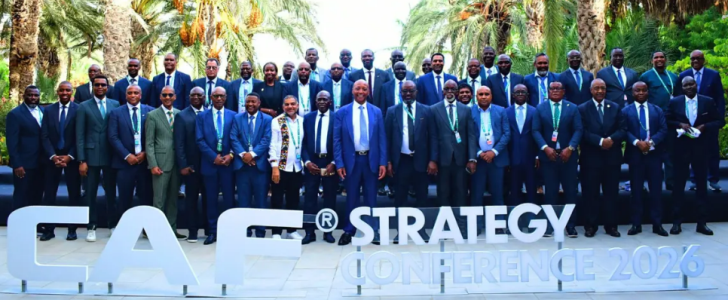
African football is set for a fresh financial injection, with CAF President Dr Patrice Motsepe announcing a major increase in annual funding for national associations, regional football unions and clubs’ representatives.
The Confederation of African Football (CAF) has raised the annual subvention for each of its 54 Member Associations to as much as USD 700,000, marking a 33% increase from the previous cumulative allocation of up to USD 525,000. The revised funding structure, announced under Motsepe’s leadership and the CAF Executive Committee, is intended to strengthen football administration and accelerate development across the continent, giving national federations greater financial capacity to build competitive and sustainable football systems.
The latest adjustment continues a steady rise in CAF’s financial support to its members. In 2021, each association received USD 200,000 annually, a figure that later doubled to USD 400,000 before rising to USD 525,000. The new ceiling of USD 700,000 represents a 250% increase compared with the 2021 allocation, reflecting CAF’s stated commitment to expanding investment in the game and helping its member federations become more financially resilient.
Regional football structures and club representation will also benefit from the revised package. CAF has increased annual subventions for its Zonal Unions from USD 750,000 to USD 900,000, a 20% rise, while funding for the African Clubs Association (ACA) will grow from USD 400,000 to USD 500,000. These increases are designed to reinforce football development beyond national federations, supporting regional coordination and strengthening the institutional structures that serve clubs and other stakeholders throughout African football.
The expanded funding presents an opportunity to invest more deeply in youth development, women’s football, coaching, refereeing, administration and governance. However, its long-term impact will depend on how effectively the resources are managed and translated into tangible improvements on the pitch and beyond it. For African football, the challenge now is to turn increased financial support into stronger grassroots systems, better-run institutions and wider opportunities for emerging talent—ensuring that the continent’s growing investment in the game delivers lasting value.
Photo: CafMedia