

From the Wing to the Saxophone, the SC Villa Faithful to the Afrigo Stage — Uganda Loses a Rare Sporting and Cultural Giant
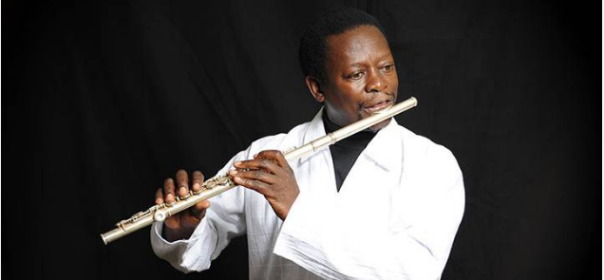
There are careers that end when the final whistle blows, and there are lives in which the game simply refuses to leave. Moses Matovu was one of those rare men. Before the saxophone made him a household name and before Afrigo Band became one of Uganda’s great cultural institutions, Matovu was a footballer — a talented winger who emerged through the football structures of his generation and played for Nakivubo Boys, the club whose history is intertwined with the birth of SC Villa, as well as Express FC, Lint Marketing Board and Police FC. Contemporary accounts of his life describe football as a major part of his youth, with one profile recording that he eventually quit competitive football in 1972 to concentrate on music.
The pitch, however, was never truly behind him. Matovu moved from the football field into music, joining the Police Band and later the Cranes Band before becoming one of the founding figures of Afrigo Band in 1975. Yet the discipline of the footballer travelled with him. He became a bandleader, saxophonist, vocalist and composer, guiding Afrigo across generations and helping turn it into one of Uganda’s longest-running live bands. His own recollections reveal just how seriously he once took football, while historical accounts place him among the players who passed through the early structures of Nakivubo Boys and the emerging SC Villa story. The remarkable anecdote is that Matovu could move between two worlds that demanded completely different forms of performance: on one day, the winger chasing a ball; on another, the musician commanding a stage. Football gave him a competitive arena; music gave that same restless talent a longer stage.
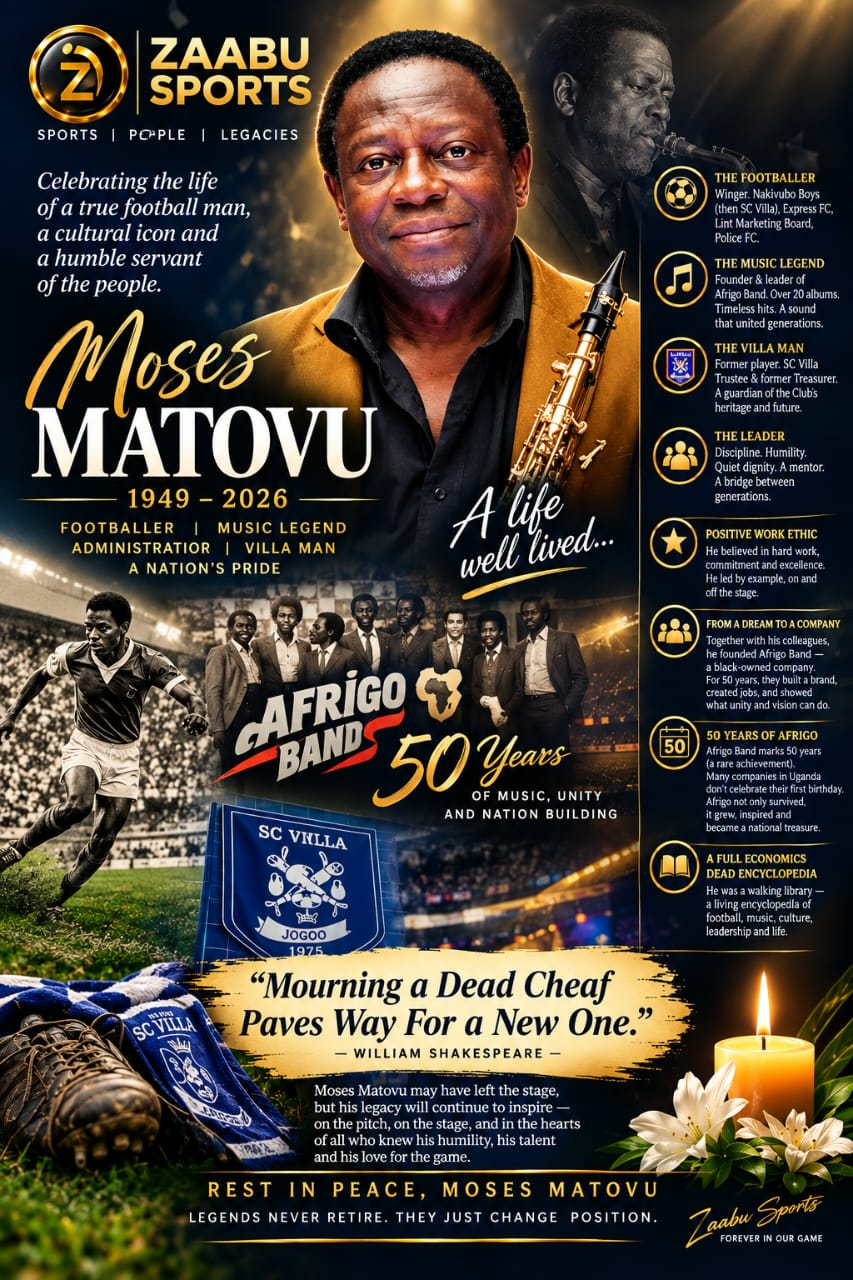
And perhaps nowhere was his football identity more enduring than at SC Villa. Matovu did not merely retain an affection for the club of his playing days; he remained deeply involved in its affairs decades after leaving the pitch. SC Villa’s own history places him among the club’s trustees, while the club has described him as a former player and a valued member of the Villa Members’ Trust whose contribution extended into the club’s governance and stability. That makes his story particularly significant to Ugandan football: Matovu was not simply a former footballer who became a musician; he was a football man who carried the memory, culture and institutional identity of his club into another generation. His loyalty to SC Villa, and his continuing love for football and the Uganda Cranes, became another chapter in a life built around performance, leadership and service.
On Thursday, 24 September 2026, that extraordinary journey came to an abrupt end. Matovu, 77, died after sustaining serious injuries in an early-morning incident in the Kibuli area of Kampala and was later pronounced dead at Kibuli Hospital. Police have opened a murder investigation, with the exact circumstances surrounding the confrontation still being established. His final hours came after he had performed at a private function at the Sheraton Kampala Hotel, a striking final image for a man whose life was spent moving between stages, football grounds and community life. But beyond the circumstances of his death lies a much larger sporting story: a boy who once chased football dreams became a musician who built a national institution, yet never stopped being a football man.
Moses Matovu therefore leaves Uganda with a legacy that cannot be contained within either a football archive or a music hall. He belonged to both worlds. He wore the boots, carried the saxophone and later helped carry the institutional memory of SC Villa. For generations who knew him only as Papa Moi, the Afrigo maestro, there is now another chapter to discover — the story of the footballer who once played on the wing, the club man who remained faithful to SC Villa, and the sporting soul who never really left the game. The music may have stopped, but the whistle has not erased his footprints.
Courtesy Photo