
For decades, Uganda’s football search largely began at home. Now, FUFA is turning its scouting map upside down. The Uganda Cranes are looking beyond Uganda’s borders for players whose football careers may have taken them elsewhere, but whose family roots still lead back home. The strategy is built around three pillars—heritage players, stronger domestic club competitions and structured academies—as FUFA attempts to create a wider and more sustainable talent pipeline for the national teams.
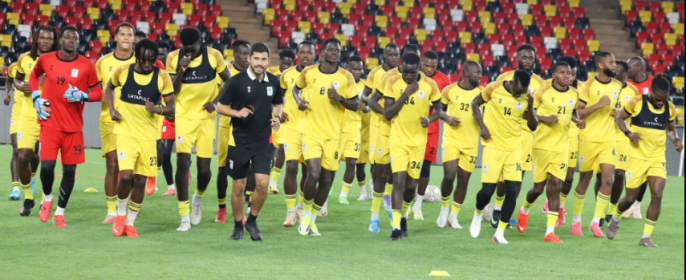
The first signs of the new approach are already visible in the Cranes camp. FUFA says consultants have identified more than 200 professional players around the world who may be eligible to represent Uganda, with 20 subsequently followed up by the federation and its technical team. Nine of those players have now joined the national-team contingent ahead of the Cranes’ return home from Tunisia and their September 29 AFCON 2027 qualifier against Libya in Hoima. Uganda began the qualifying campaign with a 1-1 draw against Tunisia, giving the technical team another competitive opportunity to assess its squad.
It is a group that tells a remarkable story of football migration and Ugandan ancestry. Abdoulaye Sissako of Sint-Truiden, Akpan David Udoh of Mosta FC, Dieudonne Gaucho Debohi of Raków Częstochowa, Souleyman Diaby of FC Winterthur, Vula Arnold of Beerschot VA, Noble Okello of Lexington SC, Nathan Asiimwe of Salford City, Kelvin Owusu Boateng of Austria Vienna and Kingdom Osayi of Assyriska FF have all been followed up through their Ugandan family connections. Their roots stretch from Kampala, Busia, Majanji, Masaka and Pakwach to Kaberamaido, while their football journeys have taken them through academies and professional leagues across Europe and North America.
The intriguing part is that this is not simply about adding unfamiliar names to a squad sheet. It is about building connections before building a team. Okello, a towering midfielder raised in Toronto, has previously represented Canada at senior level and is being considered within FIFA’s provisions on a change of sporting nationality. Asiimwe, born in London to Ugandan parents, is already part of the current Cranes setup, while the other heritage players bring different positional profiles and experiences. FUFA says engagements and documentation required under FIFA regulations and national laws are continuing for the remaining players. The wider plan also places domestic professional football and youth academies at the centre of long-term national-team development.
And perhaps that is the most interesting chapter of this story: a Ugandan footballer no longer has to grow up on a Ugandan pitch to eventually find his way into the Cranes. One player may be discovering his game in Kampala, another in London, another in Toronto, Brussels or Vienna—but the destination can still be the same shirt. As Uganda builds towards AFCON 2027 on home soil alongside Kenya and Tanzania, FUFA is effectively widening the front door to the national team. The next Cranes generation could therefore be born in many cities, shaped by many football cultures, and still come together under one flag.
Photo Credit: Fufa Media